Most of our projects begin with a phone call, a scope of work, and a deadline. That’s the nature of environmental consulting. But occasionally a project comes along that sits a little differently – one where the science and the mission are genuinely aligned, and the work feels like exactly what you got into this field to do.
The Pennask Habitat Enhancement Project is one of those.
About the project
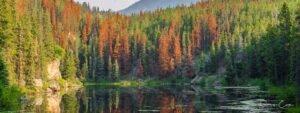
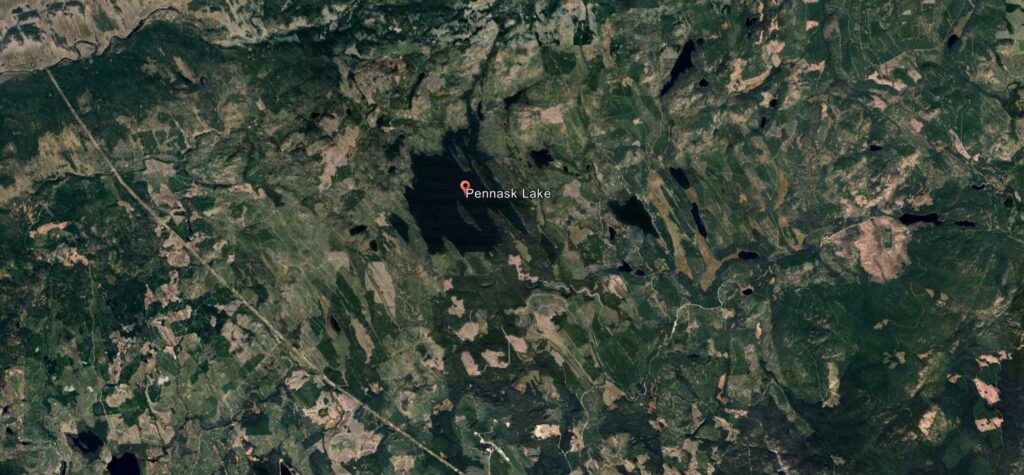
The Pennask watershed sits in the Interior of British Columbia, northeast of Merritt in the Nicola Region – a landscape shaped by fire, forestry, and the kind of slow habitat degradation that rarely makes headlines but steadily erodes the conditions wildlife depend on. The project is centred on the Pennask and Penasq’t lake areas and covers roughly 114,000 hectares of critical ungulate, upland bird, and fish habitat.
The initiative is led by Hunt.Gather.Conserve. Society – H4BC – a hunter-led grassroots wildlife conservation organization in British Columbia, in partnership with the Okanagan Nation Alliance.
The project’s first phase represents approximately one-third of the full restoration scope. When complete, it will see over 100,000 native trees in the ground – rehabilitating decommissioned roads, restoring riparian areas, and reconnecting habitat corridors across the watershed.
A watershed worth protecting
The Pennask watershed is one of the Interior’s most significant wild trout fisheries. That context matters for understanding what wildlife and riparian restoration work actually means here. Re-establishing native vegetation along streambanks improves water temperature regulation, bank stability, and stream shading – conditions that directly support fish populations and the broader aquatic ecosystem that depends on them.
Healthy riparian systems don’t function in isolation. They anchor the terrestrial habitat around them, supporting the ungulates, upland birds, and predators that make a landscape ecologically intact.
What Interface brought to the table
Our role on the Pennask Project has been rooted in the ecological assessment and technical work that underpins effective habitat restoration at landscape scale. That means understanding what the land has been, what it is now, and what conditions are needed to move it toward what it should be.
This is the kind of work our team was built for. Ecosystem modeling, cumulative effects assessment, and spatial data analysis are well-suited to the complexity of a project at this scale, where decisions need to be grounded in evidence, not assumption.
Why this kind of work matters
BC is experiencing a well-documented wildlife crisis. Moose populations have declined by 50–70% across much of the province. Mule deer numbers have been trending downward for decades. Upland bird populations are under sustained pressure. The drivers are layered – climate change, predator dynamics, disease – but habitat loss and degradation sit at the foundation.
Habitat restoration at meaningful scale is one of the few interventions with a real evidence base behind it. Revegetation improves forage. Structural diversity supports a wider range of species. Road rehabilitation reduces predator access and human disturbance in areas where those pressures have compounded over time. Healthy, intact watersheds buffer against the extremes that are increasingly shaping land and water across BC.
At 114,000 hectares, the Pennask Project isn’t a small gesture. It’s the kind of scale that can actually move the needle.
A note on partnership
Good conservation outcomes in BC increasingly depend on collaboration across sectors that don’t always share a table: government agencies, Indigenous Nations, industry, and on-the-ground organizations with the local knowledge and community trust to execute. The Pennask Project reflects that model. The H4BC and ONA partnership brings together Indigenous land stewardship values and hunter-conservationist field knowledge in a way that’s embedded in the scope and seriousness of the work.
Our role as technical advisors and ecological practitioners fits naturally into that structure.
We take on every project with the same commitment to rigorous science and practical outcomes. But some projects carry a little more meaning than others.
The Pennask Habitat Enhancement Project is restoring landscape that generations of wildlife – and the people who depend on them – will benefit from. We’re glad to be part of it.